

Research & perspective
What 160,497 SAM.gov opportunity events can and cannot tell you
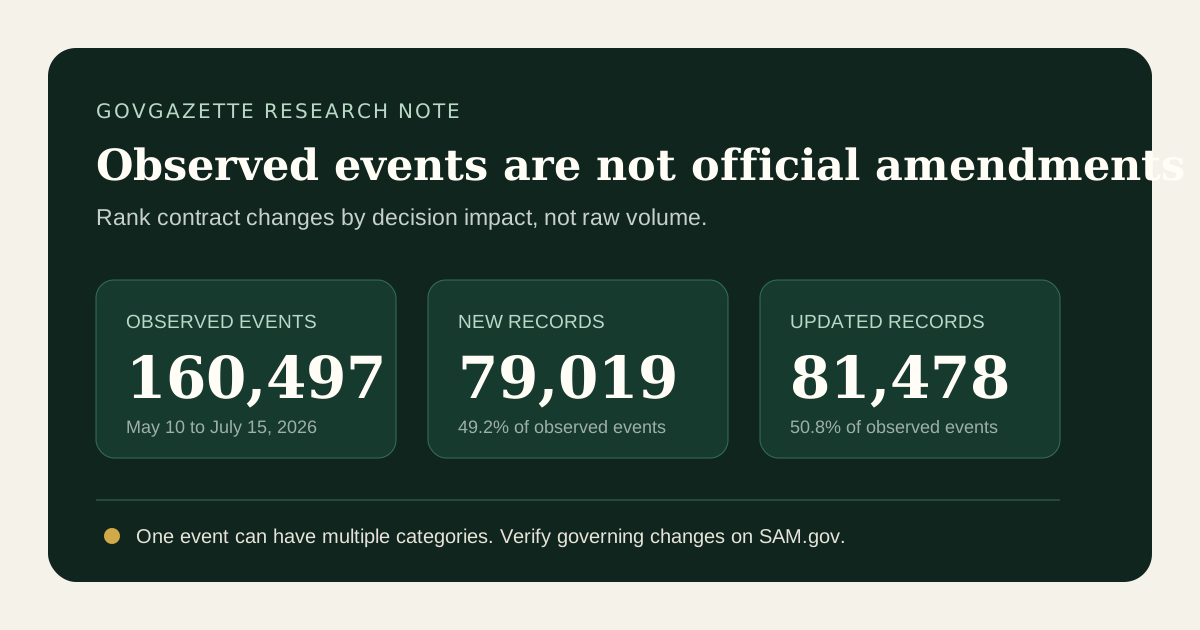
Raw change counts can mislead. Our first 160,497 events show why contractors should rank changes by their effect on a bid instead of frequency.
Some screenshots and steps describe an earlier edition of GovGazette. Use Search to explore today's records.
Ask which changes affect eligibility, the response package, or the deadline, not only how many records changed.
Repeated manual checks can miss a new file or find a notice too near its deadline. Saved searches, forecasts, and clear review rules help teams open the most important changes first.
GovGazette has recorded 160,497 opportunity events across 120,445 SAM.gov notice IDs since May 10, 2026. An "event" here is a detected difference between imported notice snapshots. It is not an official SAM.gov amendment ID. The data can test a monitoring process. Record status changes make up most of the current data, so it cannot support a fair ranking of amendment types.
That limitation is still useful. Raw change volume is a bad alert priority system.
The finding
The 160,497 events split almost evenly between 79,019 new-notice events and 81,478 updated-notice events. Of the updated events, 80,701 include a status change category. That is 99.0%.
It would be easy to claim that almost every SAM.gov amendment is a status change. We do not think the data supports that. Import history, activation and deactivation behavior, source snapshots, and baseline fills can all affect the totals. One event can also carry more than one category.
The conclusion is narrow: our event count measures differences between imported records, not a representative survey of how agencies amend solicitations.
If a product ranks alerts by field-change counts, bulk status changes can rank above a file or deadline change that affects tomorrow's proposal plan. We want to prevent that result.
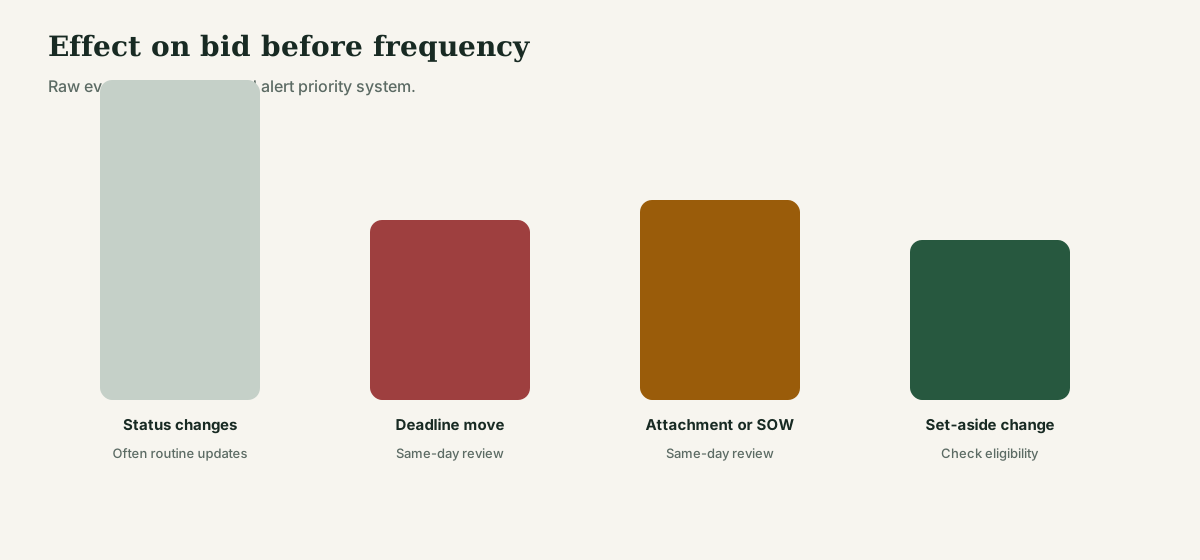
Rank changes by their effect on a bid, not by how often a field changes in the data.
What the detector compares
When the source data contains the fields, GovGazette can compare:
- notice details such as title, solicitation number, notice type, and posted date
- active status and archive date
- response deadline
- set-aside name and code
- NAICS and PSC classification
- resource links and attachments
- point of contact
- agency, office, and place of performance
Those categories describe what GovGazette can recognize. They do not prove every SAM.gov source file exposes each type of amendment the same way or that the data shows the true frequency of each type.
A better priority order
For pursuit work, rank a change by what it does to your decision:
- Review now: response deadline, attachment package, set-aside eligibility, or cancellation.
- Daily review: NAICS or PSC classification, point of contact, place of performance, agency or office, and meaningful title or notice-type changes.
- New work: a new opportunity that matches a saved search you use.
- Review later or hide: fields that do not change whether you bid.
Categories alone are not enough. A later deadline and an earlier deadline share a label but have different consequences. An attachment added to a notice you already no-bid may not matter. A small change on a tracked pursuit can matter a lot.
A useful alert states which search or pursuit matched, what changed in plain English, the previous and current values, who owns the review, and what happens next. No owner means another unread notification.
Detection time is not amendment time
Every monitoring system records when it observed or imported a difference. Use that time for delivery and audit, not as the exact time an agency amended a solicitation.
For routine work, the day your team learned about the change may be enough. For compliance, deadlines, protests, or legal questions, check the official SAM.gov notice and its documents. GovGazette is a research tool, not the source of record.
Our guide, How to track SAM.gov opportunity changes, shows how to assign an owner, record a decision, and set a due date. You can also search current opportunities and compare notices with your previous notes. Check SAM.gov for the latest amendments and attachments.
If a classification changes, use the NAICS reference or PSC finder to read the official code label before you recheck eligibility and fit.
Methodology
We queried GovGazette's local opportunity_change_events database on July 17, 2026. The period begins May 10, 2026 and ends July 15, 2026.
- Population: 160,497 events across 120,445 distinct SAM.gov notice IDs.
- Event types: 79,019 new and 81,478 updated.
- Status category: present in 80,701 updated events, or 99.0%.
- Unit: GovGazette creates an event when a normalized record changes between imports.
- Several changes: one updated event can contain more than one change category.
- Exclusions: this analysis does not treat an event as an official amendment, infer legal effect, or rank agencies.
The database supports day-to-day monitoring. It is not a random sample of all federal amendments. SAM.gov bulk files and record updates can change the results. We will not rank change frequency until we have tracked enough records from enough sources.
Sources and verification
The counts above come from the GovGazette database query described in Methodology. Use these official pages to check notices and contracting rules. They do not check GovGazette's event counts.
- SAM.gov Contracting, the official place to search and verify federal opportunity notices.
- Federal Acquisition Regulation Part 5, the federal framework for publicizing contract actions.
- U.S. Small Business Administration federal contracting guide, official small-business contracting resources.
The GovGazette editorial team wrote and reviewed this article. We checked the data and product behavior against the importer and monitoring classifier on July 17, 2026.