

Contracting guide
Bid/no-bid review for government contracts
A bid/no-bid process for simplified acquisitions: check fit, past performance, and capacity, then choose pursue, investigate, or hold.
Some screenshots and steps describe an earlier edition of GovGazette. Use Search to explore today's records.

Why bid/no-bid matters
A search takes minutes. A weak proposal can take days. Small firms should reject poor fits and reserve proposal time for suitable work.
Use fixed checks to choose pursue, investigate, or hold. Save the reasons so you can review them later.
Choose one of three decisions
Make a decision. “Maybe” uses time without setting a next step.
- Pursue: fit is clear enough and capacity exists; start the response plan
- Investigate: you still need facts about attachments, bonding, or clearance
- Hold / no-bid: stop work and record why so you do not repeat the debate
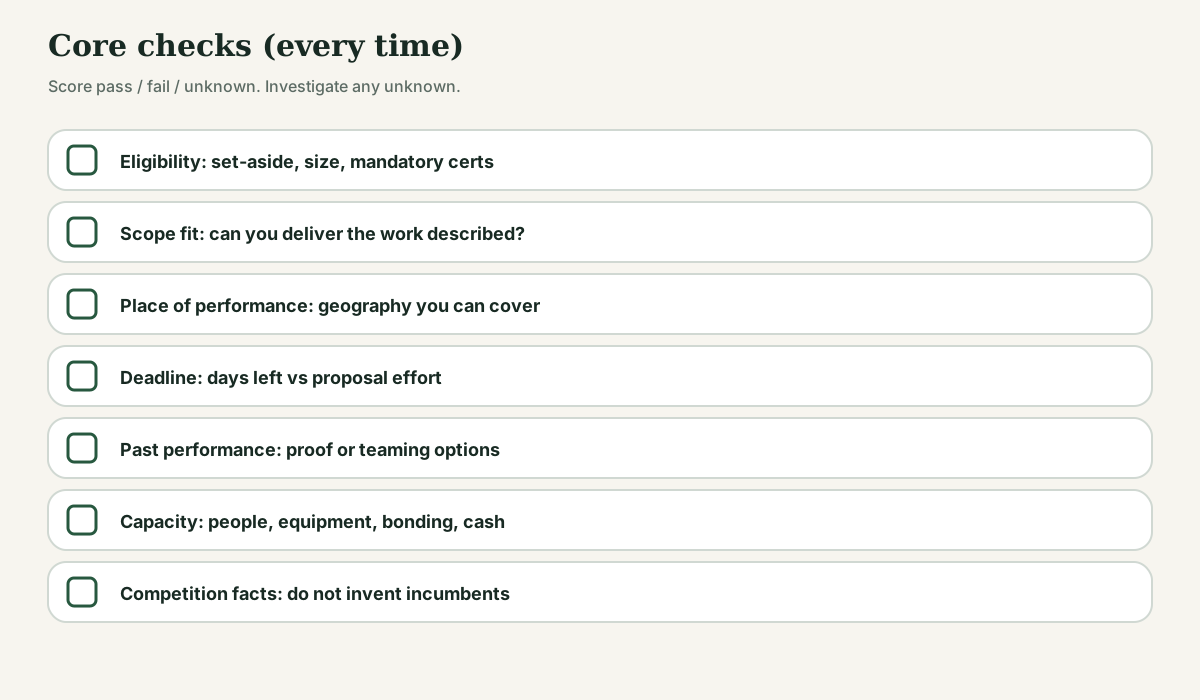
Core checks (run every time)
Score each as pass, fail, or unknown. Investigate any unknown.
- Eligibility: set-aside + size standard + any mandatory certifications
- Scope fit: can you deliver the work described?
- Place of performance: can you cover the geography?
- Deadline: calendar days left vs proposal effort
- Past performance: do you have relevant proof or a credible team partner?
- Capacity: people, equipment, bonding, cash, insurance
- Competition clues: do not invent incumbents; unknown stays unknown
Start with simpler acquisitions
For early bids, favor clear work that needs a shorter proposal. Avoid multi-volume technical proposals with large compliance matrices until your team has done similar work. Prefer set-asides you qualify for and services you already sell.
Label your reasons
When you write the reasons for your decision, name each source:
- official: from the solicitation, FAR, or SBA rule you can cite
- notice details: classification, deadline, and set-aside information shown on the opportunity
- inference: judgment call; keep it explicit
- community-anecdote: stories, not rules
GovGazette tools
Search and preview opportunities without an account. A free sign-in opens the full notice on the website; public REST and MCP research remain keyless. Bookmark searches and keep your review notes in your own workflow. Agents can use the tools described on the For agents page.
- Record your pursue, investigate, or hold decision with its supporting sources.
- Free agent API: /agents
- Agent discovery: /llms.txt and /agents/openapi.json
Weekly review (30 minutes)
Choose one NAICS code and one set-aside or state. Review new and changed notices. Choose pursue, investigate, or hold. Record each no-bid. Skip notices outside that search.