

Contracting guide
How to win your first government contract
First Contract Path: set up an entity, get a UEI, check demand, learn set-asides, and decide when to bid.
Some screenshots and steps describe an earlier edition of GovGazette. Use Search to explore today's records.
Who this guide is for
You sell something the government buys, such as facilities work, supplies, IT services, construction support, or professional services. You want to pursue a first award without a $10,000 to $30,000 capture platform.
This guide helps you register, find suitable work, and respond on time. It cannot promise an award.
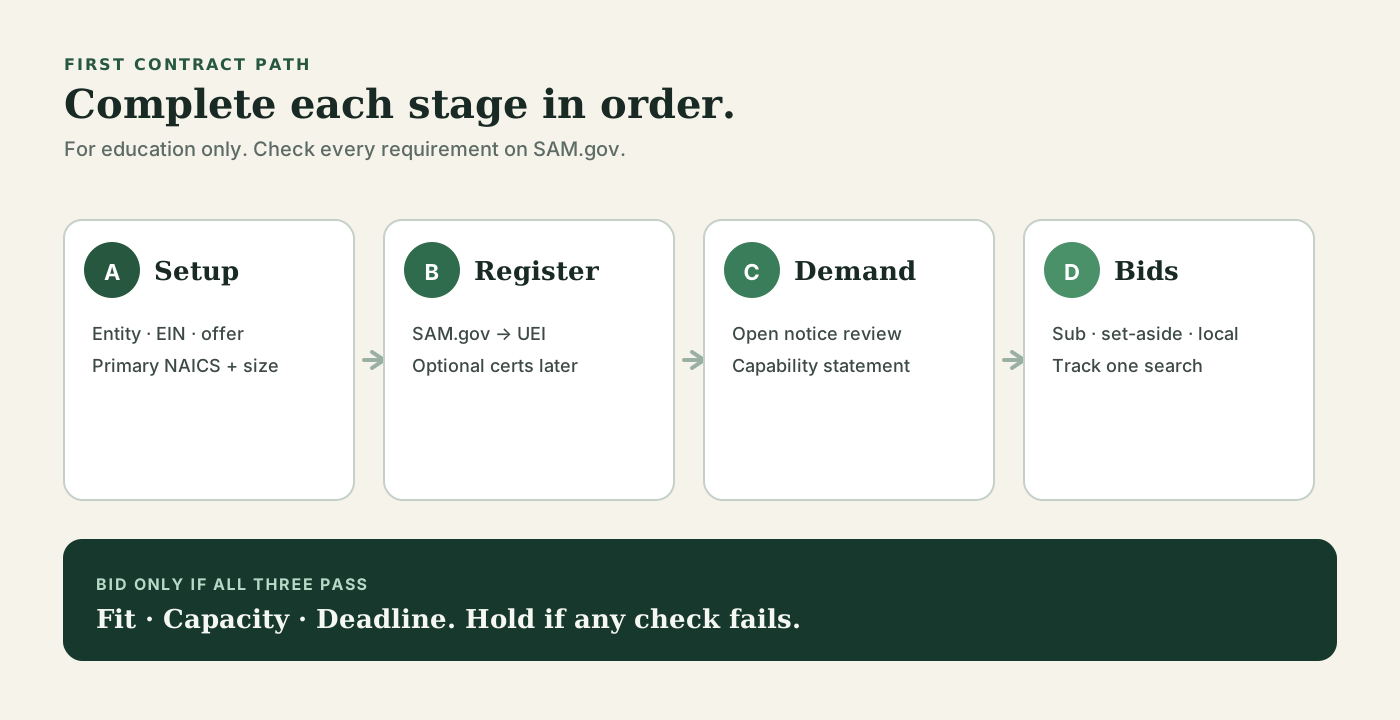
The First Contract Path
Complete the stages in order. You need an active registration to prime. Registration alone does not show which agencies buy what you sell.
- A. Business setup: legal entity, EIN, plain-English offer, primary NAICS + size standard
- B. Registration: SAM.gov → UEI, SBA profile, optional certifications (don’t block everything on certs)
- C. Demand check: confirm buyers purchase your offer; capability statement; outreach
- D. First bids: choose subcontracting, set-aside prime work, or state and local work; track one focused search; bid only when fit, capacity, and deadline pass
Phase A. Business setup
Set up a legal entity, EIN, and business bank account so the government can pay you. Your legal and bank records must match.
Write your offer in one sentence a contracting officer would understand. Add an example of a similar commercial purchase.
Pick a primary NAICS code and check its SBA size standard. A wrong code can distort research and set-aside checks. Start with the industry pages and official titles in the reference library.
- Use the NAICS industries reference and the NAICS industries reference to pick codes found on open notices
- Recheck size eligibility whenever NAICS changes
Phase B. Registration (SAM + UEI)
Primes need an active SAM.gov registration and a Unique Entity ID (UEI). Registration often blocks first-time bidders. Allow several weeks if your documents do not match.
See our guide to common registration problems. APEX Accelerators, formerly PTACs, offer free help.
Phase C. Demand check
Before you write proposals, confirm that the government buys what you sell. Browse open notices by NAICS, PSC, agency, and state. If nothing matches for months, broaden the search or review your offer.
Use a one-page capability statement with your firm, NAICS codes, clear differences, past commercial work, and contact details. A long brochure adds little value.
- Agency pages: the Agencies reference
- State place-of-performance: the States reference (for example, Texas federal contracts)
- PSC product/service codes: the Product & service codes reference and the Product & service codes reference
Phase D. First bids
Choose how to start:
- Subcontract under a prime to build past performance
- Bid on simplified acquisitions or set-asides in your size class
- Start with state or local work if federal requirements exceed your current staff or funds
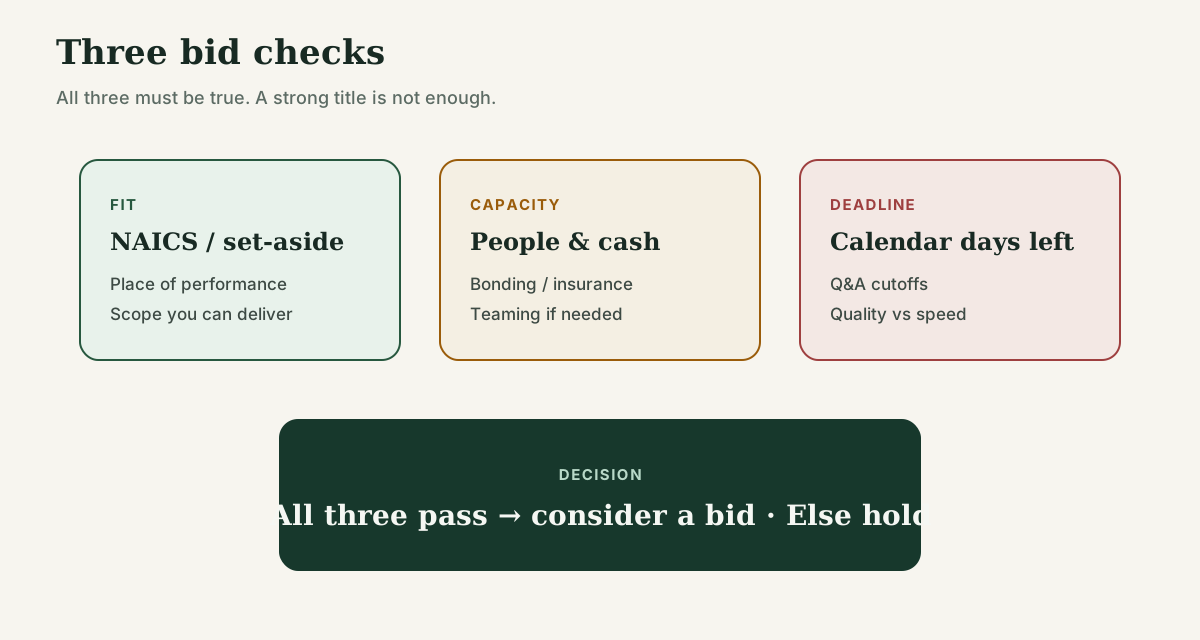
Bid only when fit, capacity, and deadline pass
Check fit (NAICS, set-aside, place, and scope), capacity (people, bonding, and cash), and the deadline. Hold if any check fails.
Record the reasons for your bid/no-bid decision in your own working notes. Use public opportunity and award records to support each reason.
- How to read a notice page: /guides/read-opportunity-page
- What set-asides mean: /guides/what-is-a-set-aside
- Bid/no-bid guide: /guides/bid-no-bid-workflow
What to do in the next 7 days
Do not try to learn everything. Take a few steps:
- Days 1 and 2: check entity and EIN status, write a one-sentence offer, and choose a primary NAICS code
- Days 3 through 5: start or fix SAM registration; ask APEX for help if needed
- Days 6 and 7: bookmark one focused search, open five real notices, and use the notice checklist